

Space Exploration Milestones: Europe's Mona Luna Rover and Lunar Missions
By on February 16, 2026
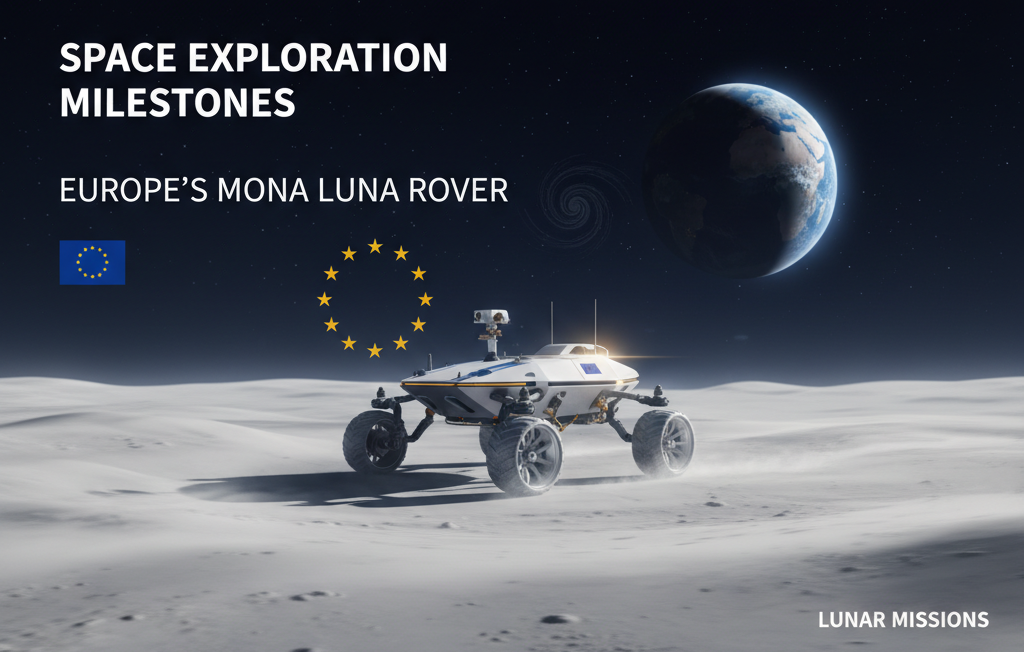
Space Exploration Milestones: Europe's Mona Luna Rover and Lunar Missions
In July 2023, Europe's Mona Luna Rover made headlines as it took its first successful test drives on the lunar surface, marking a significant milestone in lunar exploration. This rover not only represents France's ambitious plans for space but also the broader European commitment to exploring the Moon. The Mona Luna is set to pave the way for future missions, demonstrating Europe's growing role in the new era of lunar exploration.
Key takeaways
- The Mona Luna Rover aims to explore the lunar surface and test technologies for sustainable mobility.
- France's national space agency, CNES, plays a crucial role in funding lunar missions and rover development.
- The private sector in France is increasingly contributing to lunar exploration through partnerships and innovations.
- Successful test drives have confirmed the rover's capabilities in real lunar conditions.
- European lunar missions aim to support international efforts for sustainable human presence on the Moon.
- Mona Luna's advancements could lead to further exploration of Mars and beyond.
- The mission highlights the importance of collaboration between public and private sectors in space exploration.
The Mona Luna Rover: A New Era of Exploration
The Mona Luna Rover is a product of France's increasing investment in space exploration, both through CNES and private partnerships. This rover weighs around 250 kilograms and is designed with advanced mobility systems that allow it to traverse the Moon’s rugged terrain. Its primary objectives include exploring the lunar surface, conducting scientific experiments, and testing technologies that could facilitate long-term human presence on the Moon.
The rover’s recent successful test drives are more than just a technical achievement; they symbolize Europe’s ambition to reclaim its position in space exploration. The development of Mona Luna aligns with the international trend of returning to the Moon, driven by the prospect of sustainable exploration and resource utilization.
The Role of CNES and the Private Sector
France's national space agency, CNES, is pivotal in orchestrating lunar missions and supporting the development of rovers like Mona Luna. With a budget increasingly focused on lunar and planetary exploration, CNES has fostered an environment where innovation thrives. This investment is complemented by the growing involvement of the private sector, which brings fresh ideas and technologies into the fold.
French companies are stepping up, offering cutting-edge solutions that enhance mission capabilities. For instance, the collaboration between CNES and private firms led to the creation of advanced navigation systems for the rover, enhancing its ability to explore challenging lunar landscapes.
Testing and Preparing for Success
The Mona Luna Rover has undergone rigorous testing to ensure it can withstand the harsh lunar environment. During its initial test drives, engineers collected valuable data that will refine its subsystems and improve performance. These real-time assessments are crucial as they allow for adjustments before the rover embarks on its primary mission.
The tests showcased not just the rover's mobility but also its ability to collect and analyze data in situ. By simulating lunar conditions on Earth, engineers can make informed decisions about the rover's final configuration and capabilities. This iterative process is essential for preparing the rover for the unforgiving realities of the Moon.
Future Implications for Lunar Exploration
The successful deployment of the Mona Luna Rover has broader implications for lunar exploration. Europe aims to play a vital role in the global effort to establish a sustainable human presence on the Moon. This involves not just scientific exploration but also the potential for resource utilization, which could support future missions to Mars and beyond.
The data collected from Mona Luna will contribute to a better understanding of the Moon’s geology and resources. This information is critical for planning future missions, including those aimed at establishing lunar bases. The collaboration between international space agencies and private companies will be vital in achieving these ambitious goals.
Conclusion: A Step Towards the Stars
The Mona Luna Rover stands as a testament to Europe's commitment to space exploration. As it prepares for its mission, it not only symbolizes technological innovation but also embodies the collaborative spirit necessary for tackling the challenges of lunar exploration. As nations work together, the dream of sustainable human presence on the Moon becomes increasingly attainable. The journey of Mona Luna is just the beginning—who knows what new horizons await us in the vastness of space?
Entertainment

Samsung Unveils World's First 130-Inch Micro RGB TV with Next-Generation Color Technology

Hyperloop Technology 2026: Testing High-Speed Transportation at 600+ MPH

Aerospace Breakthroughs: Pantuo Pantala eVTOL and the Future of Urban Flight

How Vincent Van Gogh really lost his ear
Gaming

The LHC's Two Decades of Discovery: From Higgs Boson to Exotic Hadrons

Everything you wanted to know about The OC
History

The Evolution of Particle Accelerators: From 1980s Theory to LHC Reality

TIME's Best Inventions Hall of Fame: 25 Iconic Innovations Transforming Modern Life
JSON Schemas for Solar Panels in Energy3D, EnergyPlus, and Detection Datasets

Smart Home Robotics Evolution: From Vacuums to Climbing Rovers
Read More
Everything you wanted to know about The OC
Jane Jeffries|

Atlantis: truth or myth?
Laurie Lucas|

Some of the most wildly inaccurate historical dramas on TV and the misconceptions they bring.
Laurie Lucas|

How Vincent Van Gogh really lost his ear
Jane Jeffries|

Why do coincidences always seem to happen all the time?
Jane Jeffries|