

Aerospace Breakthroughs: Pantuo Pantala eVTOL and the Future of Urban Flight
L
By Laurie Lucas on February 16, 2026
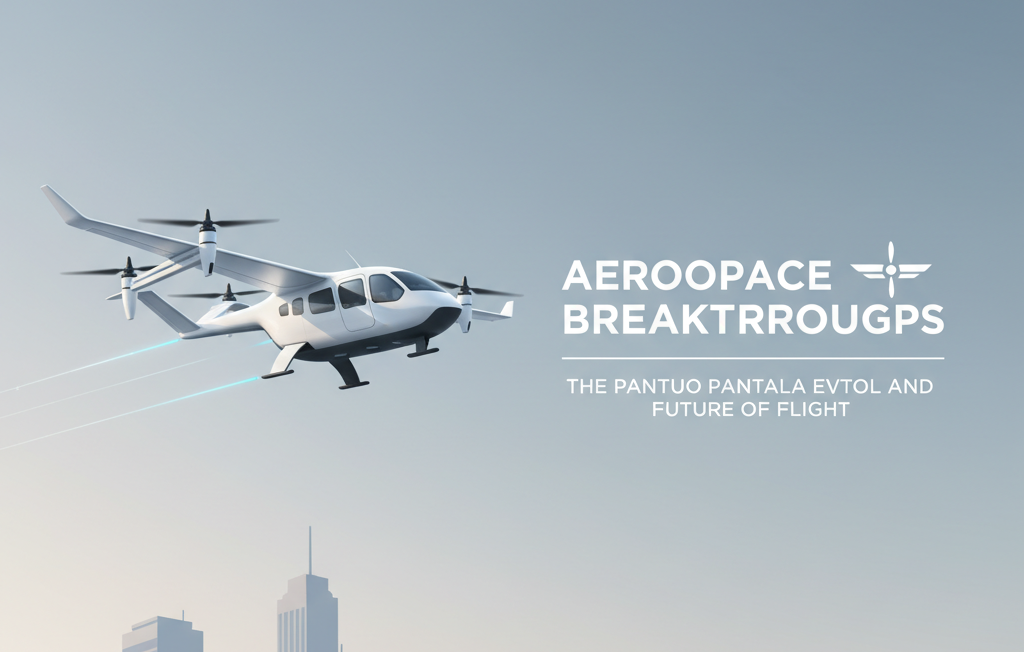
Aerospace Breakthroughs: The Pantuo Pantala eVTOL and Future of Flight
Imagine a bustling city skyline where electric vehicles gracefully zip through the air, avoiding traffic congestion and providing swift, efficient transport. This is not just a futuristic dream; it is becoming a reality with the emergence of electric vertical takeoff and landing (eVTOL) aircraft. Among the front-runners in this innovative field is the Pantuo Pantala, a remarkable eVTOL that promises to redefine urban mobility.
Key Takeaways
- The Pantuo Pantala is an eVTOL aircraft designed for urban air mobility, featuring a unique design that enhances efficiency and safety.
- It can accommodate up to four passengers and has a range of about 250 kilometers (155 miles), making it ideal for city travel.
- The vehicle operates on electric power, contributing to reduced carbon emissions and supporting sustainable urban environments.
- Pantuo Aviation emphasizes smart city integration, aligning its technology with the future of urban infrastructure development.
- The Pantala's first successful test flight in 2021 demonstrated its feasibility and the capabilities of Pantuo's engineering team.
- With a growing interest in eVTOL technology, companies like Pantuo are poised to lead the charge in revolutionizing air transportation.
- The rise of eVTOLs is expected to alleviate urban traffic issues, enhancing the quality of life in densely populated areas.
The Rise of eVTOLs
The aerospace industry is undergoing a seismic shift with the introduction of eVTOL aircraft. These aircraft, designed to take off and land vertically, are tailored for urban environments where space is at a premium. The Pantuo Pantala stands out in this rapidly evolving landscape. Its sleek design incorporates innovative aerodynamics that maximize efficiency while ensuring safety across its operations.
The Pantala can carry four passengers and has a competitive range of approximately 250 kilometers. This capability enables quick trips across cities, potentially transforming the way people commute. For instance, a journey from the outskirts of a city center to its core, which may take an hour in traditional traffic, could be reduced to just a fraction of that time with the Pantala.
Sustainable Urban Mobility
Sustainability is a pressing concern globally, and the Pantuo Pantala addresses this through its electric propulsion system. By operating on electric power, the aircraft significantly lowers carbon emissions compared to traditional helicopters and small aircraft. This aligns with global efforts to reduce the aviation industry's environmental impact.
Moreover, the integration of the Pantala into urban air traffic systems could lead to smarter cities. The concept of urban air mobility supports the idea of interconnected transport networks, where eVTOLs complement existing public transportation systems. This holistic approach could lead to reduced traffic congestion and improved air quality in urban areas.
Technological Innovations Behind the Pantala
The success of the Pantala is not merely a stroke of luck; it is the result of significant technological advancements in engineering and design. Pantuo Aviation's engineering team has demonstrated exceptional capability, as shown during the Pantala's first test flight in 2021. This flight verified critical configurations and marked a pivotal moment for the company.
The design of the Pantala incorporates cutting-edge technologies that enhance flight stability and efficiency. The aircraft's rotor system is engineered to provide optimal lift and maneuverability. This focus on engineering excellence ensures that the Pantala can operate safely within the complex airspace of urban environments.
The Future of Flight
As the aerospace industry shifts towards eVTOL technology, the potential applications are vast. Companies like Pantuo Aviation are at the forefront of this transformation, not just in developing aircraft but in envisioning the future of urban infrastructure. The Pantala serves as a prototype for what’s possible, paving the way for more advanced models that could include autonomous features and expanded passenger capacities.
The implications of widespread eVTOL adoption are profound. Imagine a future where air taxis become as commonplace as ride-sharing services, providing an efficient alternative to ground transportation. The Pantuo Pantala could be the catalyst that inspires cities worldwide to rethink their transportation frameworks.
Conclusion
The Pantuo Pantala represents more than just an aircraft; it is a glimpse into the future of urban transportation. As cities grapple with congestion and environmental challenges, eVTOLs like the Pantala offer practical solutions. Pantuo Aviation’s commitment to innovation and sustainability places it at the forefront of a new era in aerospace. As these technologies develop, one can only wonder how our daily commutes might transform—perhaps one day, taking to the skies will become as ordinary as hopping in a car.
Entertainment
Samsung Unveils World's First 130-Inch Micro RGB TV with Next-Generation Color Technology

Hyperloop Technology 2026: Testing High-Speed Transportation at 600+ MPH

Aerospace Breakthroughs: Pantuo Pantala eVTOL and the Future of Urban Flight

How Vincent Van Gogh really lost his ear
Gaming

The LHC's Two Decades of Discovery: From Higgs Boson to Exotic Hadrons

Everything you wanted to know about The OC
History

The Evolution of Particle Accelerators: From 1980s Theory to LHC Reality

TIME's Best Inventions Hall of Fame: 25 Iconic Innovations Transforming Modern Life
JSON Schemas for Solar Panels in Energy3D, EnergyPlus, and Detection Datasets

Smart Home Robotics Evolution: From Vacuums to Climbing Rovers
Read More
Everything you wanted to know about The OC
Jane Jeffries|

Atlantis: truth or myth?
Laurie Lucas|

Some of the most wildly inaccurate historical dramas on TV and the misconceptions they bring.
Laurie Lucas|

How Vincent Van Gogh really lost his ear
Jane Jeffries|

Why do coincidences always seem to happen all the time?
Jane Jeffries|