

JSON Schemas for Solar Panels in Energy3D, EnergyPlus, and Detection Datasets
J
By Jane Jeffries on February 16, 2026
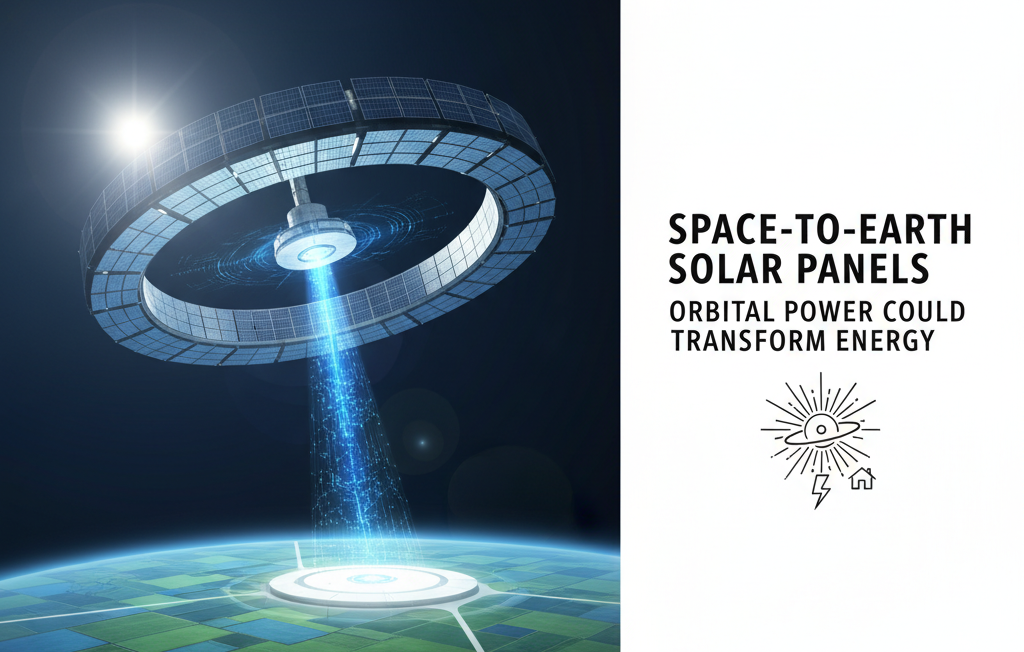
Space-to-Earth Solar Panels: How Orbital Power Stations Could Transform Energy
Imagine a world where solar panels float above the Earth, capturing sunlight in its most abundant form and beaming energy back to our planet. This is not the stuff of science fiction; it's the potential reality offered by space-to-Earth solar panels. With growing energy demands and a pressing need to reduce our carbon footprint, orbital power stations could revolutionize how we think about energy generation and distribution.
Key Takeaways
- Space-to-Earth solar panels convert solar energy into microwaves for transmission to Earth.
- NASA's research from the 1970s laid the groundwork for solar-to-microwave technology.
- Orbital power stations can generate continuous energy, unaffected by weather or time of day.
- Ground stations receive microwave energy and convert it back into electricity for the grid.
- Solar panels in space can produce up to 240 kilowatts of electricity during peak sunlight.
- The technology offers a solution to land-use challenges faced by terrestrial solar farms.
- Major companies like Starlink are exploring satellite technology for broader applications.
The Promise of Orbital Power Stations
The concept of space-to-Earth solar panels isn't new; NASA's research as far back as the 1970s explored how to convert solar energy into electricity, and then into microwaves for transmission. This foundational work has recently gained traction as technological advances have made the idea more feasible. The idea is straightforward: solar panels placed in orbit capture sunlight, convert it, and send energy back to Earth through microwaves.
This method can address two significant issues: energy storage and distribution. Conventional solar panels are limited by daylight hours and weather conditions. In contrast, solar panels in space can operate continuously, generating energy around the clock, rain or shine.
How It Works: The Energy Transfer Process
The energy transfer process begins with solar panels collecting sunlight in space. These panels can generate a whopping 240 kilowatts of electricity during optimal sunlight. Once the energy is harvested, it is transformed into microwaves, which are beamed down to Earth. Ground stations receive these microwaves and convert them back into usable electricity for the power grid.
This system not only provides a steady energy flow but also eliminates many of the inefficiencies associated with current solar technologies. For example, terrestrial solar farms require substantial land, which can lead to deforestation and habitat destruction. Space-based systems can sidestep these environmental concerns.
Advantages Over Conventional Energy Sources
Space-to-Earth solar panels offer several advantages over both fossil fuels and terrestrial renewable sources. First, they significantly reduce the carbon footprint associated with energy generation. Unlike fossil fuels, which emit greenhouse gases, this method relies solely on sunlight, a clean and renewable resource.
Additionally, orbital power stations can be deployed in locations where traditional infrastructure may not be feasible. Remote or disaster-stricken areas can benefit from the consistent energy supply these systems provide, making them a versatile solution for global energy needs.
The Role of Technology and Companies
Companies like Starlink are already pioneering satellite technology that could supplement energy generation efforts. As they roll out constellations of satellites in low Earth orbit, the potential exists to integrate energy transmission with existing communication systems. This convergence could lead to significant advancements in both energy and telecommunications, creating a robust infrastructure that supports a cleaner future.
The technological advancements required for this transformation are not out of reach. Research and development are already underway to refine the microwave transmission process and improve energy conversion efficiency. As these technologies mature, the prospect of deploying orbital power stations becomes increasingly plausible.
The Future of Energy: A Challenge to Innovate
As we stand on the brink of what could be a major shift in energy generation, the challenge is clear: how do we move from concept to reality? Governments, private companies, and researchers must collaborate to tackle the technical and regulatory hurdles that lie ahead.
The potential impact of space-to-Earth solar panels is immense. Imagine a world where energy is abundant, clean, and accessible to all, regardless of geography. This vision isn’t just a dream; it’s a challenge for innovators and policymakers alike. As we explore this frontier, the possibilities for a sustainable future are limited only by our imagination and determination.
The sky isn’t the limit; it’s just the beginning.
Entertainment
Samsung Unveils World's First 130-Inch Micro RGB TV with Next-Generation Color Technology

Hyperloop Technology 2026: Testing High-Speed Transportation at 600+ MPH

Aerospace Breakthroughs: Pantuo Pantala eVTOL and the Future of Urban Flight

How Vincent Van Gogh really lost his ear
Gaming

The LHC's Two Decades of Discovery: From Higgs Boson to Exotic Hadrons

Everything you wanted to know about The OC
History
The Evolution of Particle Accelerators: From 1980s Theory to LHC Reality

TIME's Best Inventions Hall of Fame: 25 Iconic Innovations Transforming Modern Life
JSON Schemas for Solar Panels in Energy3D, EnergyPlus, and Detection Datasets

Smart Home Robotics Evolution: From Vacuums to Climbing Rovers
Read More
Everything you wanted to know about The OC
Jane Jeffries|

Atlantis: truth or myth?
Laurie Lucas|

Some of the most wildly inaccurate historical dramas on TV and the misconceptions they bring.
Laurie Lucas|

How Vincent Van Gogh really lost his ear
Jane Jeffries|

Why do coincidences always seem to happen all the time?
Jane Jeffries|