

TIME's Best Inventions Hall of Fame: 25 Iconic Innovations Transforming Modern Life
L
By Laurie Lucas on February 16, 2026
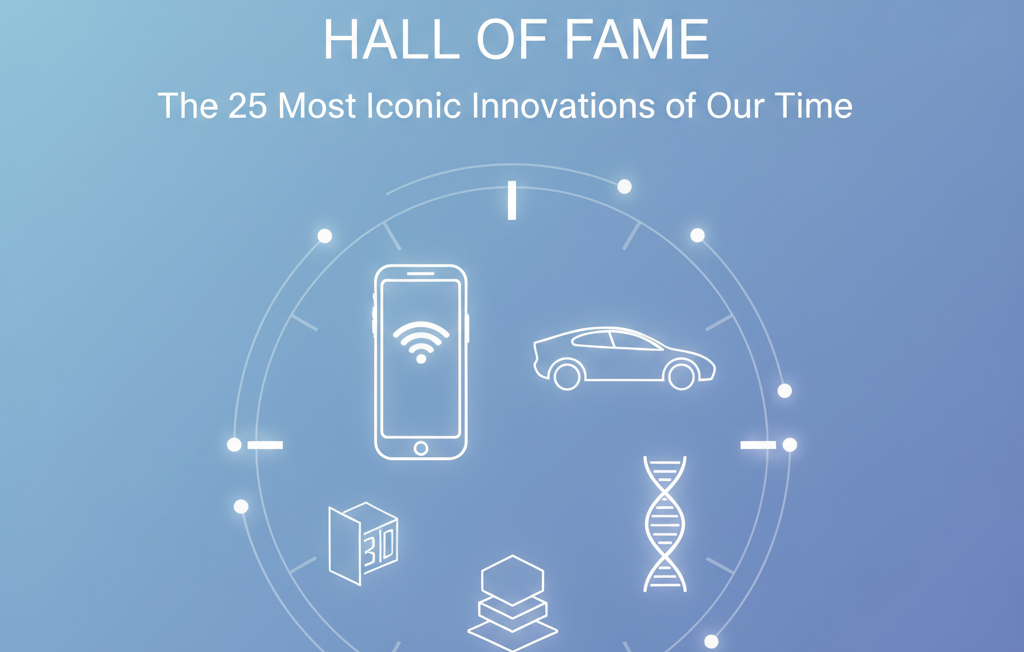
TIME's Best Inventions Hall of Fame: The 25 Most Iconic Innovations of Our Time
In a world where innovation drives progress, TIME's Best Inventions Hall of Fame stands as a testament to human ingenuity. Each year, the publication curates a list that highlights groundbreaking inventions, celebrating those that have fundamentally altered our daily lives or reshaped entire industries. From the rise of smartphones to sustainable energy solutions, these 25 innovations have left an indelible mark on modern society.
Key Takeaways
- Smartphones revolutionized communication by combining telephony, computing, and internet access into a single device.
- Electric vehicles are transforming transportation, offering an eco-friendly alternative to traditional gasoline-powered cars.
- 3D printing democratizes manufacturing, allowing individuals and small businesses to create complex items on-demand.
- CRISPR technology enables precise gene editing, paving the way for advancements in medicine and agriculture.
- Social media platforms have reshaped human interaction, changing how people connect, share, and engage worldwide.
- Artificial intelligence impacts various sectors, enhancing everything from customer service to healthcare diagnostics.
- Remote work tools have revolutionized the workplace, enabling global collaboration without geographical constraints.
The Innovations That Changed Lives
Smartphones: The Pocket-sized Revolution
The smartphone, a ubiquitous device today, has transformed the way we live, work, and communicate. It combines multiple functions—phone, camera, computer, and GPS—into a single gadget. The introduction of the iPhone in 2007 marked a pivotal moment, igniting a race among tech giants to innovate and improve mobile technology. Today, smartphones are essential tools for personal and professional tasks, illustrating how one invention can reshape an entire industry.
Electric Vehicles: Driving the Future
As climate change becomes an urgent concern, electric vehicles (EVs) are carving out a significant niche in the automotive market. Companies like Tesla have popularized EVs, making them not only desirable but also a viable alternative to traditional vehicles. With advancements in battery technology, the range and efficiency of these cars continue to improve, promising a cleaner, more sustainable future for transportation.
3D Printing: Manufacturing Reimagined
3D printing is breaking down barriers in manufacturing, allowing anyone from hobbyists to large corporations to create objects with precision. This technology enables rapid prototyping and reduces waste, making it an attractive option for industries ranging from health care to fashion. The ability to produce complex designs on-demand is democratizing manufacturing and fostering innovation across various sectors.
CRISPR: The Gene Editing Frontier
One of the most groundbreaking innovations in genetics, CRISPR technology allows scientists to edit DNA with unprecedented accuracy. This technique has enormous potential in medicine, from treating genetic disorders to developing new crops that can withstand climate change. The implications of CRISPR are vast, prompting discussions about ethics, potential misuse, and the future of genetic engineering.
Social Media: A New Age of Connection
Social media platforms have drastically altered how we communicate and share information. Facebook, Twitter, Instagram, and others have created spaces for dialogue and community building, but they also raise questions about privacy, misinformation, and mental health. The influence of social media on society cannot be overstated; it has redefined relationships and created new forms of activism, commerce, and entertainment.
Artificial Intelligence: The Smart Revolution
Artificial intelligence is no longer a concept limited to science fiction. From voice assistants like Siri to complex algorithms that drive decision-making in businesses, AI is now woven into the fabric of our daily lives. Its applications are expansive, improving efficiency in industries such as healthcare, finance, and customer service. While AI promises significant advancements, it also presents challenges regarding ethics and job displacement.
Remote Work Tools: The New Normal
The pandemic accelerated the adoption of remote work tools, forever changing the traditional office landscape. Platforms like Zoom, Slack, and Trello have enabled teams to collaborate seamlessly, regardless of their physical location. This shift has demonstrated that productivity can thrive outside of conventional office settings, paving the way for new work-life balance paradigms.
Conclusion
TIME's Best Inventions Hall of Fame is more than just a list; it represents the spirit of innovation that drives humanity forward. Each invention tells a story of creativity, necessity, and the relentless pursuit of improvement. As we look to the future, one can only wonder what groundbreaking inventions await, ready to join the ranks of those that have already changed our world. The challenge lies in not only embracing these innovations but also ensuring they are used ethically and responsibly for the benefit of all.
Entertainment
Samsung Unveils World's First 130-Inch Micro RGB TV with Next-Generation Color Technology

Hyperloop Technology 2026: Testing High-Speed Transportation at 600+ MPH

Aerospace Breakthroughs: Pantuo Pantala eVTOL and the Future of Urban Flight
How Vincent Van Gogh really lost his ear
Gaming

The LHC's Two Decades of Discovery: From Higgs Boson to Exotic Hadrons

Everything you wanted to know about The OC
History

The Evolution of Particle Accelerators: From 1980s Theory to LHC Reality
TIME's Best Inventions Hall of Fame: 25 Iconic Innovations Transforming Modern Life

JSON Schemas for Solar Panels in Energy3D, EnergyPlus, and Detection Datasets
Smart Home Robotics Evolution: From Vacuums to Climbing Rovers
Read More
Everything you wanted to know about The OC
Jane Jeffries|

Atlantis: truth or myth?
Laurie Lucas|

Some of the most wildly inaccurate historical dramas on TV and the misconceptions they bring.
Laurie Lucas|
How Vincent Van Gogh really lost his ear
Jane Jeffries|
Why do coincidences always seem to happen all the time?
Jane Jeffries|