

2026's Revolutionary Humanoid Robots: MATRIX-3 and the Evolution of Robotics
L
By Laurie Lucas on February 16, 2026
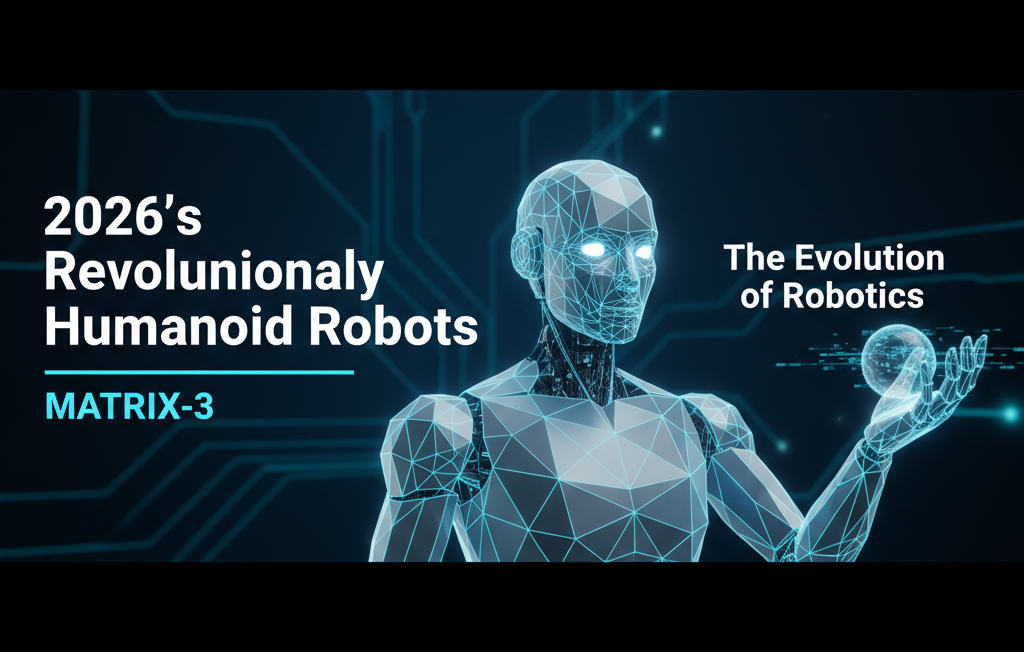
2026's Revolutionary Humanoid Robots: MATRIX-3 and the Evolution of Robotics
The year 2026 marks a turning point in robotics, especially with the arrival of the MATRIX-3 humanoid robot. As artificial intelligence and robotics converge, MATRIX-3 isn't just another robotic model; it represents the culmination of decades of research and development aimed at creating machines that can seamlessly integrate into human environments.
Key Takeaways
- MATRIX-3 features advanced AI algorithms that allow it to learn and adapt to new tasks in real time.
- The robot is designed to perform complex physical tasks, such as lifting heavy objects and assisting in various industries.
- MATRIX-3 utilizes a sophisticated sensor suite for enhanced interaction and spatial awareness.
- The robot's design mimics human movement, making it capable of navigating diverse environments with agility.
- MATRIX-3 is set to transform sectors like healthcare, manufacturing, and personal assistance.
- The advancements in MATRIX-3 highlight ongoing trends in robotics, such as improved human-robot collaboration.
- Developers prioritize ethical considerations, ensuring MATRIX-3 operates within safe and socially acceptable parameters.
The Rise of Humanoid Robots
Humanoid robots have long been the stuff of science fiction, but the reality is catching up fast. The MATRIX-3 is not just an iteration of its predecessors; it embodies a significant leap in robotics capabilities. This robot can walk, run, and even execute intricate tasks with finesse. The human-like design isn't merely aesthetic; it enhances its usability in settings designed for people, from homes to workplaces.
What makes MATRIX-3 revolutionary is its ability to learn from its environment. Unlike older models, which required extensive programming for every new task, MATRIX-3 employs advanced AI that enables it to adapt its movements and actions based on feedback. This capability significantly reduces the time and effort needed for training robots in dynamic environments.
Advanced AI and Machine Learning
At the heart of MATRIX-3's functionality lies its cutting-edge AI algorithms. These algorithms utilize machine learning techniques that allow the robot to analyze data and improve its performance over time. For instance, in a manufacturing setting, MATRIX-3 can optimize its movements to increase efficiency in assembly lines. By observing human workers, it learns the best practices and incorporates them into its operational framework.
The integration of AI also means that MATRIX-3 can engage with humans more intuitively. Equipped with sensors that detect emotional cues, the robot can adjust its behavior based on the responses it receives. This feature is particularly promising in sectors like healthcare, where emotional intelligence can significantly enhance patient care.
Practical Applications Across Industries
While the technical specifications of MATRIX-3 are impressive, its practical applications are what make it truly revolutionary. In healthcare, for example, MATRIX-3 can assist nurses by lifting patients or delivering medication, thereby allowing healthcare professionals to focus on more critical tasks. The robot can also provide companionship to elderly patients, bridging the gap between technology and human interaction.
In manufacturing, MATRIX-3 can revolutionize production lines by reducing the risk of workplace injuries. Its strength and precision enable it to take on heavy lifting tasks, allowing human workers to engage in more complex problem-solving roles. This shift not only improves safety but also boosts overall productivity.
Ethical Considerations and Future Implications
As with any technological advancement, the rise of humanoid robots like MATRIX-3 brings ethical considerations to the forefront. Developers have prioritized the creation of guidelines and frameworks to ensure that these robots operate within safe parameters. The emphasis is on human-robot collaboration rather than replacement. This perspective fosters a partnership where robots augment human capabilities rather than render them obsolete.
Moreover, as humanoid robots become more integrated into daily life, society must grapple with questions about privacy, job displacement, and the emotional implications of human-robot interactions. Ensuring that these discussions occur early in the development process is crucial for building a future where technology serves humanity positively.
A Glimpse into the Future
As we look ahead, the presence of robots like MATRIX-3 signifies a future where the line between humans and machines continues to blur. The evolution of robotics is not just about creating machines that can mimic human behavior; it’s about enhancing the quality of life through technology. The advancements made by MATRIX-3 are a testament to human ingenuity and the endless possibilities that lie ahead.
In a world increasingly influenced by AI and robotics, the challenge will be to cultivate an environment where these technologies enhance human potential rather than diminish it. As we approach this new era, the responsibility lies with developers, policymakers, and society to navigate this transformation mindfully. The future is here, and it’s humanoid.
Entertainment

Samsung Unveils World's First 130-Inch Micro RGB TV with Next-Generation Color Technology

Hyperloop Technology 2026: Testing High-Speed Transportation at 600+ MPH

Aerospace Breakthroughs: Pantuo Pantala eVTOL and the Future of Urban Flight

How Vincent Van Gogh really lost his ear
Gaming

The LHC's Two Decades of Discovery: From Higgs Boson to Exotic Hadrons

Everything you wanted to know about The OC
History

The Evolution of Particle Accelerators: From 1980s Theory to LHC Reality

TIME's Best Inventions Hall of Fame: 25 Iconic Innovations Transforming Modern Life

JSON Schemas for Solar Panels in Energy3D, EnergyPlus, and Detection Datasets
Smart Home Robotics Evolution: From Vacuums to Climbing Rovers
Read More
Everything you wanted to know about The OC
Jane Jeffries|

Atlantis: truth or myth?
Laurie Lucas|

Some of the most wildly inaccurate historical dramas on TV and the misconceptions they bring.
Laurie Lucas|

How Vincent Van Gogh really lost his ear
Jane Jeffries|

Why do coincidences always seem to happen all the time?
Jane Jeffries|