

How the Large Hadron Collider Changed Modern Physics and Industry
By on February 16, 2026
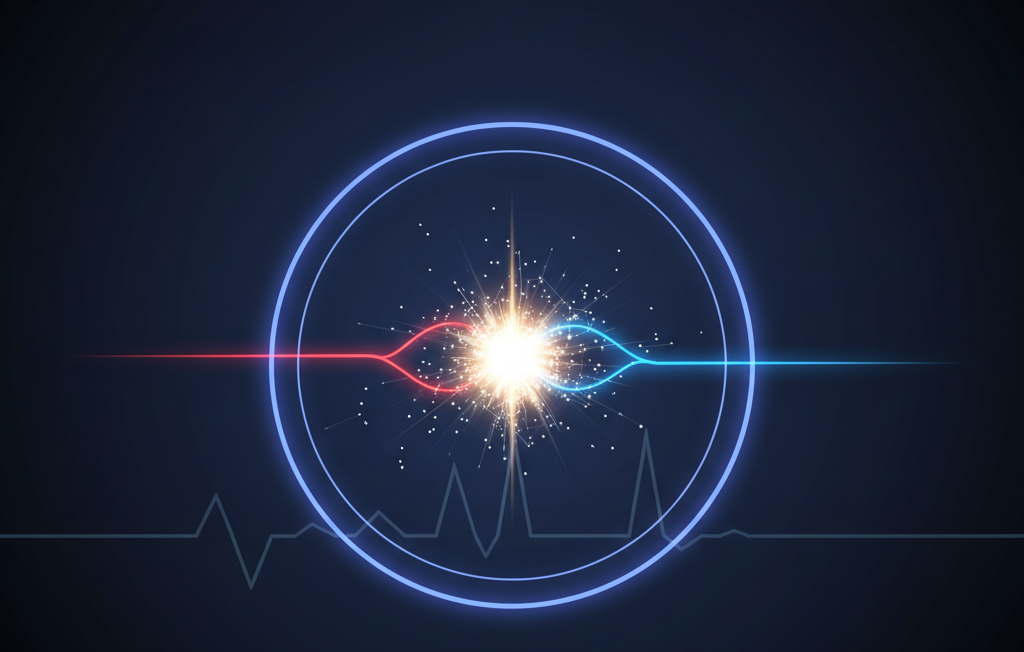
How the Large Hadron Collider Changed Modern Physics and Industry
The Large Hadron Collider (LHC) isn’t merely a colossal machine buried underground; it’s a revolution in how we understand the universe and a catalyst for industrial innovation. Imagine smashing particles together at nearly the speed of light to unravel the mysteries of matter. The LHC has not only confirmed the existence of the Higgs boson but has also opened new avenues in various fields, from fundamental physics to medical imaging.
Key takeaways
- The LHC confirmed the Higgs boson in 2012, which was pivotal for the Standard Model of particle physics.
- Researchers are exploring photon-photon collisions, leading to new insights about fundamental forces.
- The LHC’s findings may reveal a fifth force of nature, reshaping current understanding of physics.
- Technologies developed for the LHC have found applications in medical imaging and data analysis.
- The LHC fosters international collaboration, engaging scientists from over 100 countries.
- The LHC has sparked interest in quantum computing and advanced materials research.
- Public engagement initiatives at the LHC promote science literacy and inspire future generations.
Understanding the Higgs Boson
When the LHC announced the discovery of the Higgs boson, it was a monumental moment for physicists. This particle, often dubbed the "God particle," plays a crucial role in the Standard Model, explaining how other particles acquire mass. The energy levels achieved at the LHC—up to 13 trillion electron volts—allow scientists to recreate conditions similar to those just after the Big Bang. This not only confirmed existing theories but also ignited questions about what lies beyond.
The implications are staggering. The discovery not only validated decades of theoretical work but also provided a platform for future experiments that could unveil new physics. Researchers are now investigating whether the LHC can expose a fifth fundamental force, potentially altering the landscape of particle physics as we know it.
Photon-Photon Collisions: A New Frontier
One fascinating aspect of LHC research is the study of photon-photon collisions. When particles collide, they produce a variety of phenomena, some of which are incredibly rare. These interactions have led to groundbreaking discoveries, including the potential for new particles that could shift paradigms.
For example, scientists have noted that when heavy ions collide, the chance of photon-photon interactions increases. These events could reveal insights into the early universe and the forces that governed its evolution. As researchers delve deeper, they hope to uncover the nature of dark matter, which constitutes about 27% of the universe yet remains invisible.
Beyond Physics: Industrial Impacts
The LHC's influence extends well beyond the confines of particle physics. The technology developed for the collider has significantly impacted industries like healthcare and computing. The sophisticated imaging techniques pioneered for particle detection have been adapted for medical imaging. For instance, innovations in data analysis and sensor technology are improving the quality of MRI scans.
Moreover, the vast amounts of data generated by the LHC have catalyzed advancements in data processing and storage. These developments have led to improved algorithms and machine learning techniques applicable in various fields. Industries are increasingly adopting these tools to enhance efficiency and decision-making.
The Global Collaboration of Science
One of the LHC’s most profound impacts is its role as a beacon of international collaboration. With scientists from over 100 countries working together, the LHC embodies the spirit of shared knowledge. This collaboration fosters an environment where diverse ideas and perspectives can flourish, leading to richer scientific inquiry.
The partnerships forged at the LHC extend beyond academia. They include tech companies and research institutions, creating a vibrant ecosystem that encourages innovation. This collaborative spirit is vital for tackling global challenges, from climate change to public health crises.
Inspiring Future Generations
The LHC is not just a hub for cutting-edge research; it also engages the public in science. Its outreach programs aim to inspire the next generation of scientists. By making complex concepts accessible, the LHC cultivates a sense of curiosity and wonder about the universe.
Through school visits, online resources, and public lectures, the LHC demystifies science. This commitment to education is essential, especially in a world where scientific literacy is increasingly important. As future generations grapple with challenges like technological ethics and climate change, a solid foundation in scientific understanding will be crucial.
Conclusion
The Large Hadron Collider is more than a scientific instrument; it is a transformative force in both physics and industry. It challenges our understanding of the universe while simultaneously driving technological innovation. As researchers continue to explore the unknown, we stand on the brink of discoveries that could reshape not just physics but the very fabric of our technological landscape. The LHC is a testament to what can be achieved when human curiosity meets collaborative spirit.
Entertainment
Samsung Unveils World's First 130-Inch Micro RGB TV with Next-Generation Color Technology

Hyperloop Technology 2026: Testing High-Speed Transportation at 600+ MPH

Aerospace Breakthroughs: Pantuo Pantala eVTOL and the Future of Urban Flight

How Vincent Van Gogh really lost his ear
Gaming
The LHC's Two Decades of Discovery: From Higgs Boson to Exotic Hadrons

Everything you wanted to know about The OC
History
The Evolution of Particle Accelerators: From 1980s Theory to LHC Reality

TIME's Best Inventions Hall of Fame: 25 Iconic Innovations Transforming Modern Life

JSON Schemas for Solar Panels in Energy3D, EnergyPlus, and Detection Datasets

Smart Home Robotics Evolution: From Vacuums to Climbing Rovers
Read More
Everything you wanted to know about The OC
Jane Jeffries|

Atlantis: truth or myth?
Laurie Lucas|

Some of the most wildly inaccurate historical dramas on TV and the misconceptions they bring.
Laurie Lucas|

How Vincent Van Gogh really lost his ear
Jane Jeffries|

Why do coincidences always seem to happen all the time?
Jane Jeffries|