

AI Data Centers and Supersonic Computing: The Infrastructure of 2026
L
By Laurie Lucas on February 16, 2026
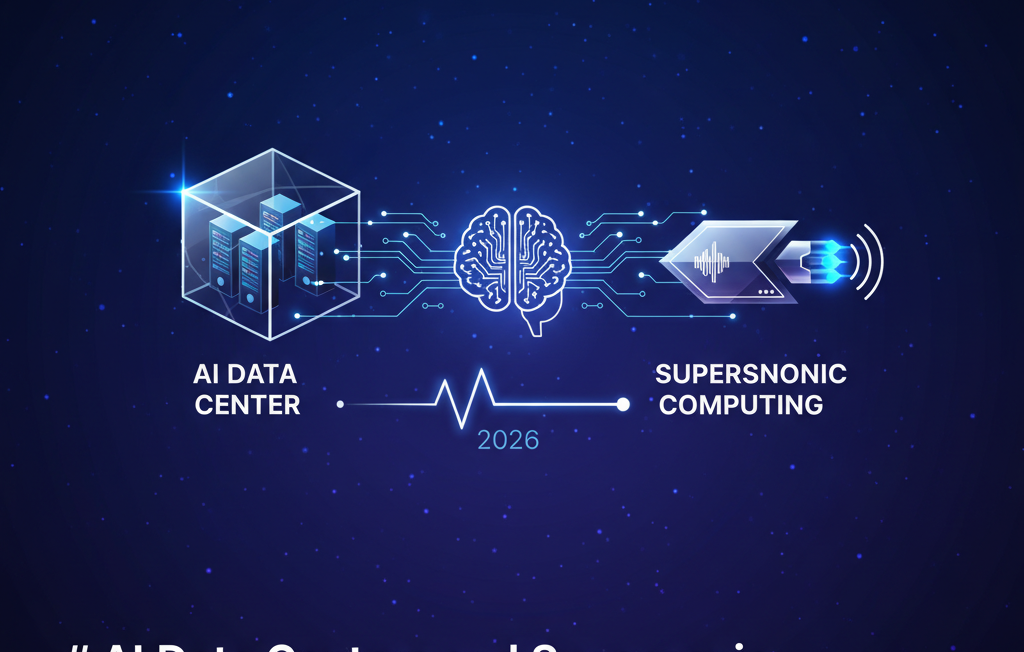
AI Data Centers and Supersonic Computing: The Infrastructure of 2026
Imagine a world where artificial intelligence processes vast amounts of data in milliseconds, enabling real-time decision-making in critical sectors like healthcare, finance, and autonomous driving. By 2026, this vision is not merely aspirational; it is set to become a reality thanks to the evolution of AI data centers and supersonic computing technologies.
Key Takeaways
- AI data centers are now essential infrastructures supporting AI's rapid advancement and widespread adoption.
- Supersonic computing refers to systems that leverage advanced hardware architectures to process data at unprecedented speeds.
- The demand for AI-driven applications is driving significant investments in data center infrastructure and energy efficiency.
- Companies are shifting from traditional server setups to specialized AI hardware to maximize performance and minimize latency.
- Edge computing is becoming increasingly important, enabling data processing closer to the source and reducing latency.
- Collaboration between tech giants and startups is fostering innovation in AI algorithms and hardware solutions.
- Sustainability is a growing concern, pushing data centers to adopt green technologies and practices to reduce their carbon footprint.
The Rise of AI Data Centers
The landscape of data centers is undergoing a seismic shift. No longer just repositories of data, they are evolving into dynamic hubs that support the computational demands of AI. As AI technologies proliferate, businesses recognize that traditional data centers cannot keep pace with the unprecedented volumes of data generated.
In 2026, AI data centers will boast specialized architectures designed for high-performance computing. These will incorporate GPUs and TPUs, which are optimized for the parallel processing tasks central to machine learning algorithms. As a result, organizations can expect faster training times for models and quicker insights from their data.
Supersonic Computing: Speeding Up the Future
Supersonic computing represents the next leap in computational power. It combines cutting-edge hardware with innovative software algorithms to process data at exceptional speeds. In this context, companies like NVIDIA and Google are at the forefront, developing supercomputers designed specifically for AI workloads.
By 2026, we can expect these systems to use advanced cooling techniques and energy-efficient designs to handle the heat generated by intense computations. A report by the International Data Corporation (IDC) suggests that the global market for AI-specific hardware will reach over $100 billion by 2026, driven by increasing demands for computing power.
The Shift to Specialized Hardware
As businesses strive for speed and efficiency, we see a significant shift from general-purpose servers to specialized AI hardware. Companies are realizing that traditional CPUs are no longer sufficient for the computational needs of modern AI applications. Instead, they are investing heavily in ASICs (Application-Specific Integrated Circuits) and FPGAs (Field-Programmable Gate Arrays) to enhance performance.
This transition is not merely a trend but an essential move towards maximizing the efficiency of AI workloads. For example, Tesla’s use of custom-built chips for its Autopilot software demonstrates the tangible benefits of specialized hardware. Expect more companies to follow suit as the advantages become increasingly apparent.
Edge Computing: The Next Frontier
As the demand for real-time data processing grows, edge computing is emerging as a key player. By 2026, data centers will leverage edge computing technologies to process data closer to its source, reducing latency and bandwidth usage. This is particularly crucial for applications in autonomous vehicles and IoT devices, where every millisecond counts.
Edge computing allows for immediate data analysis without the need to send all data back to centralized data centers. For instance, smart city applications can analyze traffic data in real time, optimizing routes and reducing congestion. This shift not only enhances performance but also mitigates the strain on central data infrastructures.
Sustainability in Data Centers
As the need for data centers grows, so does the awareness around sustainability. By 2026, the pressure on data centers to adopt green technologies will intensify. Renewable energy sources like solar and wind will play a pivotal role in powering these facilities, with companies aiming for carbon neutrality.
Tech giants are already making strides in this area. Google has committed to operating on 24/7 carbon-free energy by 2030. The industry is shifting towards more efficient cooling systems, innovative waste heat recovery methods, and sustainable building practices to minimize environmental impact.
Conclusion
The infrastructure of 2026 will not only support the rapid advancements in AI but will also redefine how we think about computing and data management. With AI data centers and supersonic computing at the forefront, businesses must adapt to these changes or risk being left behind. The future is not just about speed; it is about creating an efficient, sustainable, and intelligent ecosystem that empowers innovation. As we approach this future, the challenge for businesses will be to embrace these technologies responsibly and leverage them for the greater good.
Entertainment

Samsung Unveils World's First 130-Inch Micro RGB TV with Next-Generation Color Technology

Hyperloop Technology 2026: Testing High-Speed Transportation at 600+ MPH

Aerospace Breakthroughs: Pantuo Pantala eVTOL and the Future of Urban Flight

How Vincent Van Gogh really lost his ear
Gaming

The LHC's Two Decades of Discovery: From Higgs Boson to Exotic Hadrons

Everything you wanted to know about The OC
History

The Evolution of Particle Accelerators: From 1980s Theory to LHC Reality

TIME's Best Inventions Hall of Fame: 25 Iconic Innovations Transforming Modern Life

JSON Schemas for Solar Panels in Energy3D, EnergyPlus, and Detection Datasets

Smart Home Robotics Evolution: From Vacuums to Climbing Rovers
Read More
Everything you wanted to know about The OC
Jane Jeffries|

Atlantis: truth or myth?
Laurie Lucas|

Some of the most wildly inaccurate historical dramas on TV and the misconceptions they bring.
Laurie Lucas|

How Vincent Van Gogh really lost his ear
Jane Jeffries|

Why do coincidences always seem to happen all the time?
Jane Jeffries|